In the story "Time of Passage," James Falkman’s reverse life exemplifies the little disparity between death and birth. Through this invertion of birth and death, the author is suggesting that regardless of which happens first, what's important is how one chooses to live his or her life. The strongest evidence of similarity between death and birth is how the story begins and ends the same way: with death. Falkman revives from death at the start of the story and he relives his life to the very beginning, where technically he was non-existing. There is little distinction between the start and end of the story when Falkman awakens from death only to die again at the beginning of his life. In contrast, the time between his revival and birth serves as the interest of the story. During his lifetime, Falkman experiences death, quits his job twice, marries Marion, meets Marion, graduates school, and grows up at home. Majority of the story describes the happenings of Falkman’s life and it is those happenings and that period of time that Ballard intends for the reader to focus on. The beginning and end of life is the same for everyone: nonexistent; life is the time in between the beginning and the end.
Comments:
I took out the orignial topic sentence (top bun) because it sounded very cliche and just made what was originally the first sentence of my thesis the topic sentence. I replaced my orginally thesis with the suggested thesis from SpApA, the new thesis retains the orginal thesis's point but it is more specific to the story in discussion and sounds a lot better. I did not change the rest of my paragraph (the cheese, condiments) because I felt they were fine just the way they were. It is not a specific example from the story, instead, the whole story is the example. This was fine becaue I intentionally wanted the thesis to be supported by just one paragraph, I did not intend to expand it into an entire essay. So the example is a little bit broad but I felt it was ok to be that way.
Wednesday, October 29, 2008

Young Goodman Brown
Nathaniel Hawthorne's short story "Young Goodman Brown" forces the reader to use their imagination to interpret what exactly happened to Goodman Brown during his night in the woods. The overall story is very vague, Hawthorne never revealed exactly what happened to Goodman Brown, whether his experience in the woods were in fact real, what was the meaning behind the woods scene, and what is the moral behind the story. Although there is a lot of ambiguity in the story, many facts hinted at the idea that Goodman Brown's experience was just a delusion constructed by the Devil himself to mislead him and ultimately change his outlook on life. The very fact that Goodman Brown's whole experience was very vague and ambiguous supports the idea of a delusion. For example, once Goodman Brown returned back to town, everyone he claims to have been at the Devil gathering were behaving normally, as before he had witnessed them at the gathering in the woods. Faith loved him as much as before he had left (as well as before she went to the gathering) and the old minister was working on his sermon (as he did before Goodman witnessed him at the gathering). Everyone was behaving as they normally did, everyone except Goodman Brown himself.
Goodman Brown changed after he returned to town. Goodman was forever under the impression that everyone in town worshipped the Devil, everyone except himself. "He shrank from the venerable saint (the old minister), as if to avoid an anathema" (p 241). When Goodman cringed from the blessings of the minister, he acted as if having a blessing placed upon him was harming him, to others it may seems as if he was against Christianity and the Devil himself is against Christianity (God). Goodman also lost his passion and love for Faith when he returned to town. He rejected and resented Faith's love and joyfulness when he once embraced and enjoyed Faith's company. In fact, Goodman resented everyone; he resented life after his experience. "A stern, a sad, a darkly meditative, a distrustful, if not a desperate man, did he become" (p 241). Goodman died a lonely, bitter, unfriendly, and gloomy old man, having lived a life which Hawthorne seemed to hint at as a sad and unfulfilled life. Goodman's outlook on life was dramatically altered after his experience, as if the Devil had gotten to him and turned him away from all the pleasures in life (love, religion, friendship, etc.).
Although it was never directly stated, the change in Goodman's character insinuated that he had indeed been touched by the Devil, even if he was unaware of it. After the experience, Goodman's life was turned upside down until the point of his death. He seemed to think that everyone around him was Devil's follower, causing him to resent everyone and life; Goodman isolated himself from life, even Christianity ("on the Sabbath-day, when the congregation were singing a holy psalm, he could not listen, because an anthem of sin rushed loudly upon his ear, and drowned all the blessed strain" (p 241)). It could very possibly be that the Devil's intention from the very beginning was to have Goodman Brown become this way; from the experience Goodman unconsciously destroyed his life himself (which is what the Devil aimed for). Ultimately, Goodman became Devil’s follower by obeying the Devil’s wish.
Goodman Brown changed after he returned to town. Goodman was forever under the impression that everyone in town worshipped the Devil, everyone except himself. "He shrank from the venerable saint (the old minister), as if to avoid an anathema" (p 241). When Goodman cringed from the blessings of the minister, he acted as if having a blessing placed upon him was harming him, to others it may seems as if he was against Christianity and the Devil himself is against Christianity (God). Goodman also lost his passion and love for Faith when he returned to town. He rejected and resented Faith's love and joyfulness when he once embraced and enjoyed Faith's company. In fact, Goodman resented everyone; he resented life after his experience. "A stern, a sad, a darkly meditative, a distrustful, if not a desperate man, did he become" (p 241). Goodman died a lonely, bitter, unfriendly, and gloomy old man, having lived a life which Hawthorne seemed to hint at as a sad and unfulfilled life. Goodman's outlook on life was dramatically altered after his experience, as if the Devil had gotten to him and turned him away from all the pleasures in life (love, religion, friendship, etc.).
Although it was never directly stated, the change in Goodman's character insinuated that he had indeed been touched by the Devil, even if he was unaware of it. After the experience, Goodman's life was turned upside down until the point of his death. He seemed to think that everyone around him was Devil's follower, causing him to resent everyone and life; Goodman isolated himself from life, even Christianity ("on the Sabbath-day, when the congregation were singing a holy psalm, he could not listen, because an anthem of sin rushed loudly upon his ear, and drowned all the blessed strain" (p 241)). It could very possibly be that the Devil's intention from the very beginning was to have Goodman Brown become this way; from the experience Goodman unconsciously destroyed his life himself (which is what the Devil aimed for). Ultimately, Goodman became Devil’s follower by obeying the Devil’s wish.
Monday, October 27, 2008
Thesis
In the "Time of Passage," James Falkman's reverse life exemplifies the little disparity between death and birth. The journey in between death and birth is the meaningful part of life.
Miss Emily's Facebook
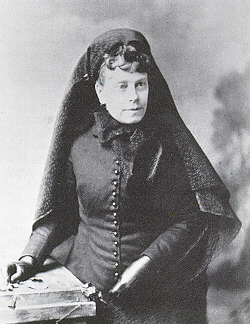 Emily Grierson is annoyed by the tax collectors!
Networks: Citizens of Yoknapatawpka County
Window Sitters of America
Antisocial Women of the late 1800s
Sex: Female
Relationship Status: Convoluted
Interested In: Working Men
Looking For: Antisocial men and women
Activities: China painting, staring out of various windows, lying in dusty places
Interests: Sitting by windows, not talking for long periods of time, preserving youth
Favorite Quote: "I have no faith in human perfectability. I think that human exertion will have no appreciable effect upon humanity. Man is now only more active - not more happy - nor more wise, than he was 6000 years ago." - Edgar Allan Poe
About Me: I much prefer staying in the comfort of my old home with just my servant, myself, and dust. I feel there is nothing I could ever need from anyone else. I spend my life gracefully poised besides various windows of my home, I feel it preserves my youth, suspends my aging process for the time being. My pet peeves are the darn irritating town officials that claims I need to pay taxes and the aging process. I am very open to meeting new people as long as I do not have to talk to or socialize with them.
Wall Posts: Neighbor: Miss Emily! Let us have tea together at my place tomorrow?
Emily: I cannot. My home will loose its dreariness without me.
Neighbor: Alright. Maybe next week then?
Emily: Most likely not.
Miss Emily obviously gives off a gothic, dark, and unfriendly aura so it was only fitting her Facebook page be so. The picture is of a woman in black (as Miss Emily is so often dressed in black clothing) and the woman does not seem as old as she could be, very much like how Miss Emily likes to preserve her youth. For Miss Emily's basis information, it really exemplifies her. For example, Miss Emily is a very antisocial person, so it is only fitting she belongs to a network of fellow antisocial people so she has friends. In addition, William Faulkner did not describe very specifically of Miss Emily's personality and interests, however, he did mention many times of Miss Emily sitting in various windows of her home. It is a given that her favorite hobby was sitting still, being framed by windows, as if she is in a portrait and time is not passing by (she is not aging but instead preserving herself). The thread somewhat explains why Miss Emily is never seen outside her home: she has to maintain the dreary environment of her home (also to preserve it from changing).
Sunday, October 19, 2008
"We Real Cool" Analysis
Upon first reading Gwendolyn Brooks's "We Real Cool," it seemed a pretty simple poem. Short, straight to the point sentences, much like William Carlos Williams's "This Is Just To Say." Upon further analysis and research, Brook's poem had a more in depth purpose. Obviously, the poem is about the lives of these young Pool Players and their rebel lifestyle. In more depth, the short sentences of the poem represent the short lives of Pool Players, their short lives in turn are due to their rebellious lifestyle. For example, the Pool Players "lurk late" implying they get into trouble and fights, and they "thin gin" whether it's selling watered down gin or consuming gin in a large amount. The short sentences also imply the simplicity of the Pool Player's lifestyles. The Pool Players drink, get in trouble, and fool around with women; they do not think about their future nor do they think about the consequences of their actions. Pool Players take life as it comes as them: they are born, they live, and they "Die soon.” Life is meant to be fun according to the Pool Players and so they stress living in the moment and avoiding serious issues; the most important thing to them is their image: they are “real cool.”
The reason for Brook writing this poem is not absolutely clear but it could be to show the contrast between the lives of most working people and the Pool Players. Working people take life too seriously while Pool Players don’t take life serious enough. Working people worry about bills, food, family, and work while the Pool Players only have to worry about staying cool and enjoying the short life they believe they are given. Brook may be trying to bring to light that there needs to be a steady balance of both fun and seriousness in life. If life is taken too serious, it may seem like life lasts too long due to the lack of happiness and freedom, while on the other hand, too much fun makes life very dangerous and short.
The reason for Brook writing this poem is not absolutely clear but it could be to show the contrast between the lives of most working people and the Pool Players. Working people take life too seriously while Pool Players don’t take life serious enough. Working people worry about bills, food, family, and work while the Pool Players only have to worry about staying cool and enjoying the short life they believe they are given. Brook may be trying to bring to light that there needs to be a steady balance of both fun and seriousness in life. If life is taken too serious, it may seem like life lasts too long due to the lack of happiness and freedom, while on the other hand, too much fun makes life very dangerous and short.
Saturday, October 18, 2008
William's Parody
I Am Telling You
I am leaving
tonight
before you
get off work
I have
taken the couch
and the
computer
I also
cleared all our accounts
and I
took the dog
This is my parody of William Carlos William's "This is Just to Say," although my version has a more serious tone. My poem takes leaving apologetic notes to another level. William's "This is Just to Say" is a man leaving his wife a sarcastic note about eating plums that he was not suppose to, mine is about someone leaving a relationship and taking everything along. Serious issues are suppose to be dealt with in person or in a formal setting but instead, leaving a note about ending a relationship could be just as effective, as in this case. Similar to William's poem, the speaker in this poem is neither sorry nor serious-minded, instead they are comical and insensitive. William made note-leaving more than just about leaving a notice, he made the note-leaving process more like telling a story or having a conversation. Taking that into perspective, I wrote a poem about the ending of a relationship, a woman leaving her husband a note about leaving him and taking all his stuff while he was at work. Just like Williams, the note is telling a story and the woman is having a one-way conversation with her absent husband.
Friday, October 10, 2008
Symbolism
Symbolism is an essential part to any literary work, it not only gives the literary work more depth but it also makes the work more interesting. With symbolism, a bird is no longer a bird and water is no longer just water. With symbolism, a bird can signify freedom, beauty, grace, death, or ugliness. Water represents life, continuity, purity, sadness, or taint. A bird and water can signify both very positive as well as negative things depending on what kind of bird and what kind of water. For example, a white dove can represent freedom and beauty due to it clean, white coat and its graceful flight while a crow, on the other hand also a bird, might be an image for death and ugliness due to its dark feathers and its traditional link to witches and magic. Symbolism gives more meaning to an objective thing. In William Carlos Williams’ "The Red Wheelbarrow," line 4-5 reads:
"a red wheel
barrow"
The poem seems simple enough at first, too simple to decipher anything out of the eight lines but with deeper investigation, many hidden meaning are discovered. The "red wheel/barrow" literally means a red single-wheeled vehicle used to push things around in, but symbolically the "red" represents blood, "wheel" represents life, and "barrow" (defined as the large mound of earth or stones upon a grave) represents death. From the simple lines "a red wheel/barrow" comes the meaning: "a dying life."
Symbolism makes things more important and interesting, its hidden meaning makes readers search and analyze beyond the obvious. Not only that, symbolism can provide open interpretation for readers. One thing can symbolize many other different things and it can hold different meanings and values for different people. It all depends upon the reader's mind of thought, experiences, and knowledge of the history behind the literary work. That is what makes this literary device so popular: it allows a piece of literary work to be adapted for all audiences from all walks of life.
"a red wheel
barrow"
The poem seems simple enough at first, too simple to decipher anything out of the eight lines but with deeper investigation, many hidden meaning are discovered. The "red wheel/barrow" literally means a red single-wheeled vehicle used to push things around in, but symbolically the "red" represents blood, "wheel" represents life, and "barrow" (defined as the large mound of earth or stones upon a grave) represents death. From the simple lines "a red wheel/barrow" comes the meaning: "a dying life."
Symbolism makes things more important and interesting, its hidden meaning makes readers search and analyze beyond the obvious. Not only that, symbolism can provide open interpretation for readers. One thing can symbolize many other different things and it can hold different meanings and values for different people. It all depends upon the reader's mind of thought, experiences, and knowledge of the history behind the literary work. That is what makes this literary device so popular: it allows a piece of literary work to be adapted for all audiences from all walks of life.
Imagery and Language
 This picture really represented the overall emotion in Sylvia Plath's "Daddy." The poem is full of anger, resentment, and violence resulting from the anger and resentment. Plath obliviously had a lot of bottled up emotion towards both her father and her ex-husband that she flooded this poem with. This picture is of an angry face being pushed by a strong hand, much like how Plath's life was dominated by her father and ex-husband, both physically and mentally. The face is basically Plath's internal emotions and the hand is her father and ex-husband. Plath described her father and husband using various words that implied strength, control, and violence, words such as: "God," "statue," "Marble-heavy," and "wars." The hand in the image definitely displays all three qualities: strength (pushing down upon the head), control (the firm grip on the head), and violence (the forceful and rough handling of the head). The same applies to the way Plath described her own emotions: "barely daring" (fear), "stuck" (helplessness), and "kill" (anger). The head in the picture is in fear because it at the mercy of the hand, helpless because it cannot overpower the hand, and angry because it is living in fear and being controlled. The strong words Plath carefully choose in her poem to describe the thoughts and emotions within herself presents a strong, effective, and convincing image. Although it is very obvious what the negative feelings behind the poem are, having an image further enhances what the poem is trying to convey. An image aids the reader in imagining and understanding the poem, they can relate the image to the poem and visually see what the poet wants the reader to take away from the poem.
Friday, October 3, 2008
Ferrara's "My Last Duchess"
Personally, I feel Ferrar's "My Last Duchess" is a very enjoyable poem. Although over a century old, the poem is very entertaining, as if it was a part taken from a movie script. The speaker seems to be on the verge of a psychotic break right before he regains himself, like murderours in movies. Unlike many other poems, the speaker in "My Last Duchess" was a very developed character. In the short monologue, the speaker revealed a lot of himself to the audience. For example, as the speaker unveils the Duchess's painting and introduces his deceased wife, what starts off as a light introduction soon turns into a confession. The speaker is consumed with the memory of his recent wife, particularly of the bad habits she possessed. Unintentionally, the speaker begins to nagg to his audience about his recent wife. About how the Duchess flirted with other men and was very easily pleased. It becomes very obvious the speaker's dispitefullness toward the Duchess and it climaxes when the speaker said, "I gave commands;/ Then all smiles stopped together. There she stands/ As if alive" (lines 45-47). The count realizes that he has gone too far and returns himself to the present, returning to the to role of the polite host.
Anyone can tell that something is unsettling in the speaker's mind, and not only that, the speaker is a very controlling and demanding person. He was unable to accept the innocent gestures and characteristics of the Duchess and when she disobeyed his orders, he decided that he was done with her once and for all. The dialogue starts out with a introduction and a problem, presents a climax and solution, and ends with a conclusion; all in 56 lines.
Besides just the content, the form of the poem also personifies the speaker. Ferrara made sure that the entire poem followed a couplet rhyme scheme. Besides being a formal poem structure, the rhyme scheme helps convey the controlling personality of the speaker; the speaker has to control every line of his dialogue like he had to control the Duchess or else. In addition, as the poem goes on, the speaker's sentences evolve into short and incomplete statements (particularly at at the climax). The short and incomplete statements gives the feeling that the speaker is loosing his controll, he is getting too deep into his thoughts, and he is getting very excited.
"My Last Duchess" is a great example of the importance of a poem's form. A poem's form can add additional details to the subject of the poem and further bring the poem to life.
Anyone can tell that something is unsettling in the speaker's mind, and not only that, the speaker is a very controlling and demanding person. He was unable to accept the innocent gestures and characteristics of the Duchess and when she disobeyed his orders, he decided that he was done with her once and for all. The dialogue starts out with a introduction and a problem, presents a climax and solution, and ends with a conclusion; all in 56 lines.
Besides just the content, the form of the poem also personifies the speaker. Ferrara made sure that the entire poem followed a couplet rhyme scheme. Besides being a formal poem structure, the rhyme scheme helps convey the controlling personality of the speaker; the speaker has to control every line of his dialogue like he had to control the Duchess or else. In addition, as the poem goes on, the speaker's sentences evolve into short and incomplete statements (particularly at at the climax). The short and incomplete statements gives the feeling that the speaker is loosing his controll, he is getting too deep into his thoughts, and he is getting very excited.
"My Last Duchess" is a great example of the importance of a poem's form. A poem's form can add additional details to the subject of the poem and further bring the poem to life.
Wednesday, October 1, 2008
Poetic Form Response
Dante Gabriel Rossetti's "A Sonnet Is a Moment's Monument" 1st Octet in prose form:
A Sonnet is a picture of a single span of time--
A permanent dedication from the deepest thoughts of the poet
Dedicated to a past time so that it could be kept alive forever.
Whether written to express happiness or to forewarn,
It always is written from the heart, full of feelings and passion.
In whatever shape or form,
As the days and years go by,
People through the decades will still be able to see the beauty and value of the sonnet.
Although I am not a big fan of poems, I still can see that there is a drastic change in the beauty of the poem when it is transformed into prose form. One of the signs of a well written poem is its ability to describe and express huge amounts of emotions, passions, setting, and meanings with just a few simple words. Once I translated Rossetti's sonnet into prose form, it seemed as if the large amount of passion behind the sonnet disappeared. In prose form, anyone can read the poem and understand it and it no longer becomes an art, instead, it seems to be just an ordinary piece of writing. The art of writing a poem is largely in choosing the perfect words to describe each subject, because even when a word similar in meaning is chosen, it does not necessarily possess the power to pursuade or bring to life an idea.
A Sonnet is a picture of a single span of time--
A permanent dedication from the deepest thoughts of the poet
Dedicated to a past time so that it could be kept alive forever.
Whether written to express happiness or to forewarn,
It always is written from the heart, full of feelings and passion.
In whatever shape or form,
As the days and years go by,
People through the decades will still be able to see the beauty and value of the sonnet.
Although I am not a big fan of poems, I still can see that there is a drastic change in the beauty of the poem when it is transformed into prose form. One of the signs of a well written poem is its ability to describe and express huge amounts of emotions, passions, setting, and meanings with just a few simple words. Once I translated Rossetti's sonnet into prose form, it seemed as if the large amount of passion behind the sonnet disappeared. In prose form, anyone can read the poem and understand it and it no longer becomes an art, instead, it seems to be just an ordinary piece of writing. The art of writing a poem is largely in choosing the perfect words to describe each subject, because even when a word similar in meaning is chosen, it does not necessarily possess the power to pursuade or bring to life an idea.
Subscribe to:
Comments (Atom)


